
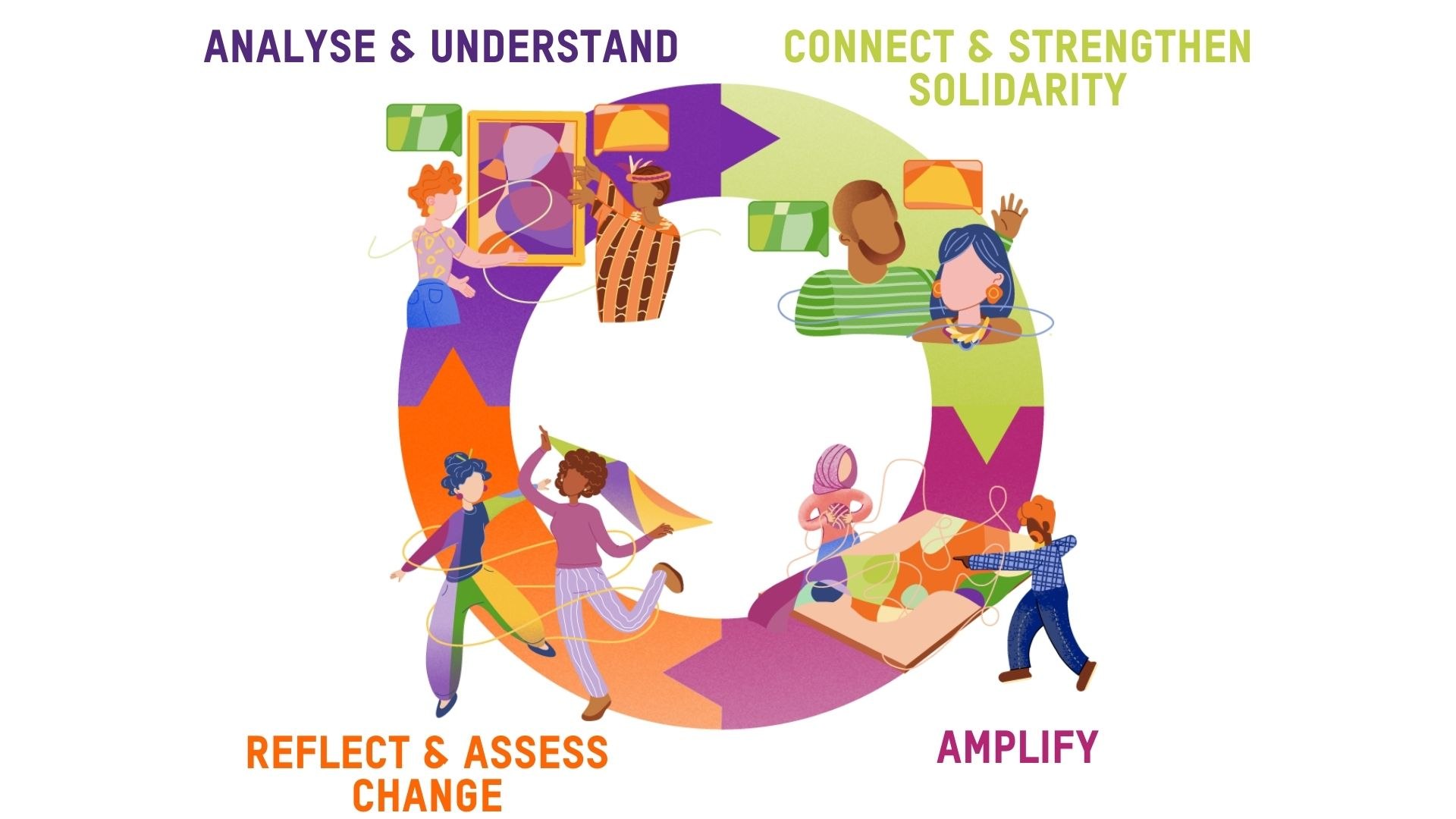
Narrative work is a long-term process, a journey of continuous iteration. It involves a fascinating mix of strategic planning, deep reflection, relationship building, crafting, testing, refining, and adaptation.
There is no one-size-fits-all approach to fostering alternative narratives. Whether you are a movement activist, creative collective, campaign strategist, or policy-maker/shaper, your approach to narrative creation will be distinct. Where to strike the balance is highly dependent on who you are and what you are planning to do.
We broadly categorized narrative work into four phases, providing resources and insights from narrative practitioners for every step of the journey. As long and challenging as this journey might seem, it is comforting to remember that experimentation and collaboration are key and fully part of the process. Exploring this cycle might help identify when and how you can best contribute to narrative work, and who else you want to connect with to go full circle.

Analyse & Understand
Engaging in narrative work invites us to look both inward and outward. Internally, it involves reconnecting and aligning with our core values, examining our assumptions and ways of working. Externally, it entails analyzing the narrative landscape, identifying dominant narratives, better understanding the people we are trying to reach and mapping actors who already are creating alternative narratives.

Connect & Strengthen Solidarity
For narratives to be relatable and nuanced, we need to leverage collaboration with diverse communities and actors. Additionally, working together with people with diverse skill sets and experiences will help foster creativity and impact. Ultimately, it is as much (if not more!) about the process than it is about the outcome. Narrative work is an opportunity to come together around core values, to develop shared visions that inspire, and to join forces to create systematic change.

Amplify
Developing narratives and crafting messages will not be enough to bring about change. We have to embody them, to amplify them both offline and online and to ensure they circulate and reach the people we are targeting – outside of our like-minded bubbles. We can tap into creativity, humor, community, art, digital innovation – or whatever helps to inspire and mobilize. There is no one-fits-all approach, so it is important to adapt to your context and remain flexible.

Reflect & Assess Change
Measuring the impact of narrative work is important, not just for donors, but to understand what’s shifting and why. But narrative change takes time, and a lot of what matters is hard to quantify. That’s why it’s key to stay realistic about what can be measured, and clear about what matters most and for whom. Instead of rigid indicators, narrative work needs a more flexible, iterative approach to measurement and learning. Regular reflection helps you see what’s changing, adapt your strategy, and celebrate progress, even when it’s subtle or slow.