
Digging deep into power dynamics: Narrative change work is about disrupting or rebalancing power dynamics. Dominant narratives often reinforce who gets to speak, who gets heard, and what is considered “normal”, important or inevitable. If we want systemic change, we need to understand and expose the power dynamics behind these narratives, including how we may contribute to these.
Amplifying alternative and more inclusive narratives: Simply stating that a dominant or negative narrative is not true (aka countering narratives) will only reinforce that dominant frame. It is more constructive to look for narratives that connect across issues and open up space for new alliances. Weaving, shaping and making visible new or alternative narratives enables us to challenge power and structures, and to convey different priorities and values.
‘New’ narratives? Sometimes we talk about creating ‘new’ narratives, but often, they aren’t truly new. They have simply been less visible to people outside a particular community or group. Most narratives aren’t invented by organisations, they already exist within movements, communities… Narrative work often means amplifying these so they can be seen, heard and valued more widely.
Embracing nuance to avoid polarization: What feels like common sense to us may not for the people we aim to reach. Narrative work means understanding how others create meaning and building bridges without compromising our values. It is about reducing polarization and embracing nuance, so our narratives reflect the complex realities people live in.
Using creativity and imagination to foster hope: Narrative work uses creativity and imagination to spark hope. Rational arguments are not enough, and it is important to create emotional links, and mobilize values that people resonate with. It helps people explore new ideas and envision possible futures, broadening their sense of what is achievable. The goal is to move people towards solutions while still acknowledging the difficult realities they face. It is about opening space for possibility without denying the challenges.
Narrative work and strategic communications can look similar from the outside, both use creativity to share ideas, but they are not the same.
Strategic communications is mostly about the message: crafting, refining, packaging and delivering information so it resonates with the target audience. It’s about the product and how efficiently it achieves communication goals.
Narrative work, by contrast, is about the process. It focuses on understanding what drives people: their values, hopes, fears, and lived experiences. It’s about connecting with communities and hearing their stories. It involves research, community organising, trust‑building, creativity, and ongoing experimentation. It aims to shift deeper beliefs and shared understandings.
Because narrative change is tied to broader social change, it requires long‑term commitment, patience, and a wider time horizon. It’s not a quick fix, it’s work that grows through relationships, reflection, and collective imagination.
There is lots of variety for “doing” narrative work. However, across a diversity of experiences some common ingredients emerge:
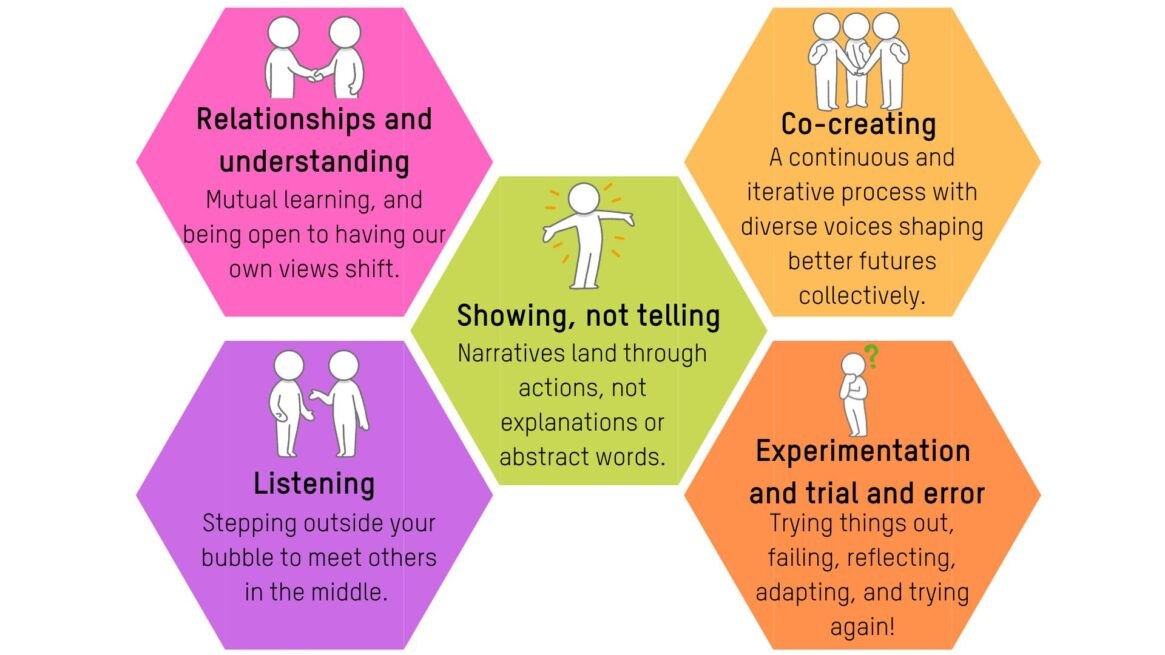
Figure 2: Five key ingredients to narrative work, based on a learning journey on building narrative power led by the Civic Space Knowledge Hub in 2025.